
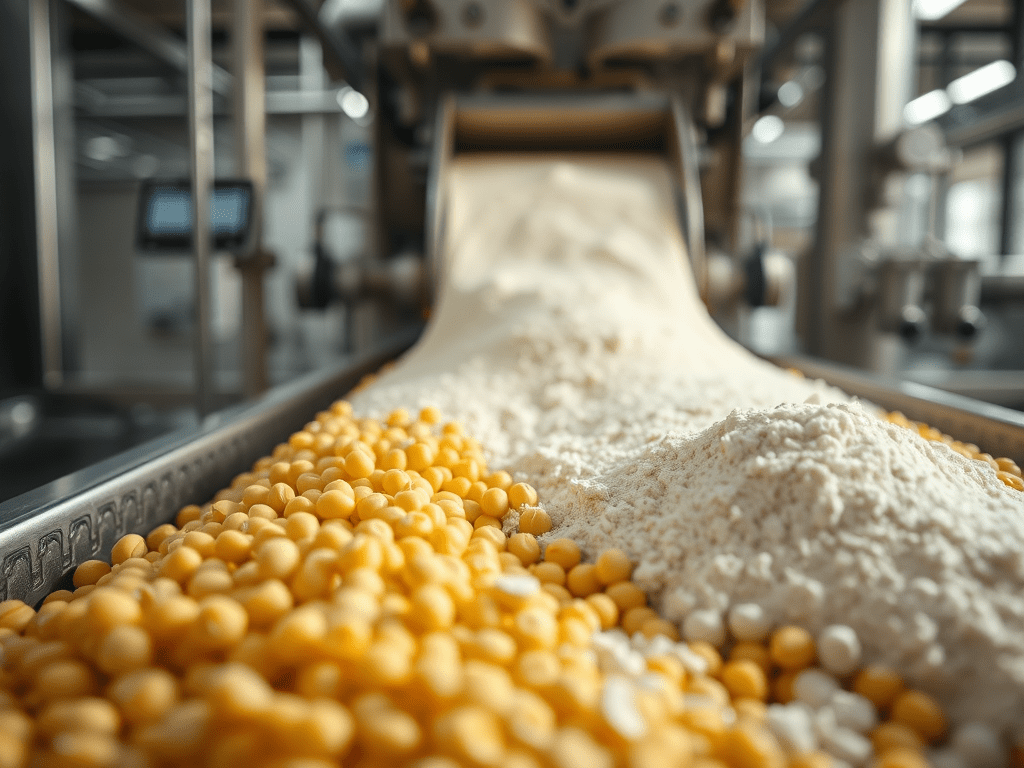
We’ve already shown you how we produce whey protein, creatine, and vitamins at our UK factory. But we’re not stopping there. In this edition of In The Lab, we’re giving you an exclusive look into how we make our vegan protein.
A vegan diet excludes meat, eggs, and dairy — which means no whey protein. However, there are plenty of plant-based alternatives, including pea, rice, soy, and hemp proteins. With the growing demand for vegan options, the UK has become a key player in the plant-based protein industry. In fact, the UK accounted for 11% of global food and drink launches containing pea protein in a single year.
Why Choose Vegan Protein?
Vegan protein isn’t just for those following a plant-based diet. It’s also ideal for people with allergies or intolerances, as it’s free from dairy and naturally gluten-free. It’s also hypoallergenic. Plus, a 25g serving of vegan protein powder delivers between 18g and 20g of plant-powered protein.
How Vegan Protein is Made
One key aspect of vegan protein powders is ensuring the protein source is highly bioavailable, which is why pea protein is so popular. Pea protein powder is made from yellow split peas, which are naturally dairy- and gluten-free.
The production process is simple. First, the pea’s outer shell is removed, and the pea is milled into flour. Then, the fibre and starch are filtered out, leaving a protein-rich white precipitate — the pea protein powder.
But we don’t stop there. The same process is repeated with fava beans, which add important nutrients like B vitamins, zinc, magnesium, iron, copper, and manganese to the mix. Copper and manganese, in particular, are crucial for maintaining healthy bones.
Once the protein powders are prepared, they’re shipped to our UK factory.
Quality Assurance
Before the raw materials are ready for mixing and packaging, they undergo a rigorous quality assurance process. Here’s a glimpse into our thorough checks:
- Raw Material Labs: All raw materials are tested upon arrival at our warehouse. The materials must meet three critical criteria: they must match our specifications, comply with micro-declarations, and meet our “gold standard.” If any of these criteria aren’t met, the materials can’t be used.
- Supplier Quality Assurance Team: This team ensures that all in-house products meet the same high standards, including packaging materials like wrappers, tubs, lids, and scoops.
- Quality Assurance Team: This team works within the production warehouse, overseeing every step of the process from the moment raw materials enter the mixing containers until the final product is ready.
Line operators play a crucial role in monitoring allergens and x-raying products to prevent cross-contamination. Once the product passes all tests, it undergoes a final taste test to ensure it meets the gold standard. Only then can it be released into the warehouse for sale.
Take Home Message
And that’s how it’s done! From a humble split pea to a premium vegan protein powder, every step of the process ensures top quality before it reaches your protein cupboard. From there, it’s just a scoop away from your shaker and, eventually, your post-workout recovery.
4o
 Doya Vibes
Leave a comment